

Getting their hands wet
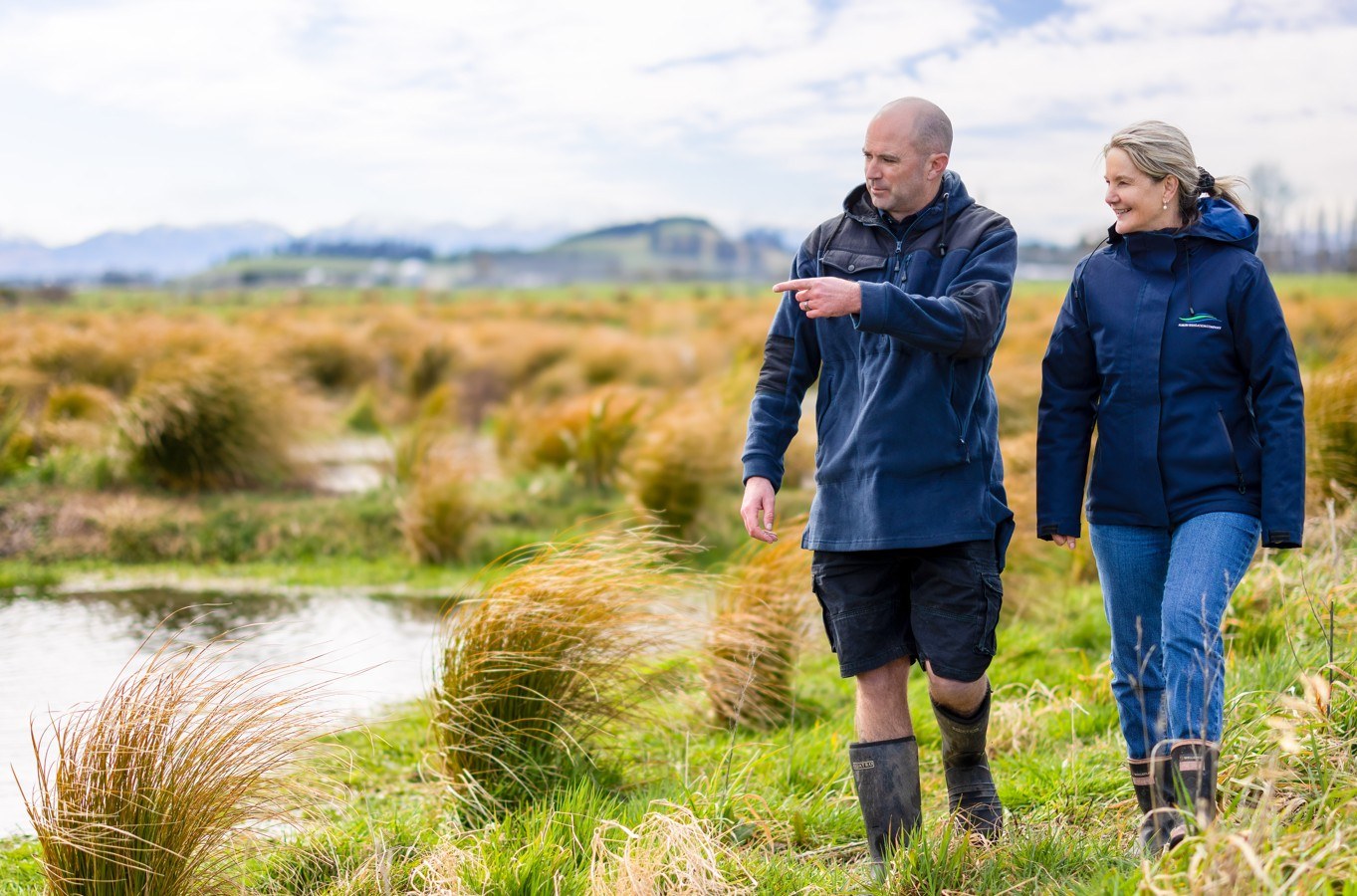
Photo: Beaven Edwards, AIC Environmental Coordinator and Rachel Vaughan, AIC Environmental Manager.
This week is Conservation Week. Here’s a background story about Amuri Irrigation Company (AIC) helping farmers get the most out of their land, naturally.
The number of wetlands in the Amuri Basin is growing, thanks to the work Amuri Irrigation Company (AIC) has been doing with local farmers since 2023.
In addition, identifying what sites in the Amuri Basin offer the greatest wetland value is now a possibility.
As part of the Amuri Basin Future Farming Project, through catchment groups AIC and farmers have been talking,
Providing education around water quality has always been the key focus of the Project, including the importance of healthy waterways, wetlands, and riparian margins in supporting the long-term environmental health of the Hurunui district.
Rachel Vaughan, AIC Environmental Manager said through this process, farmers have shown a strong understanding of the wider value of protecting wetlands and waterway margins, not only for water quality, but also for biodiversity and the resilience of the wider landscape.
“As a result, AIC invited farmers to identify areas of land they would be willing to retire for wetland restoration or treatment purposes,” Rachel said.
Historically, wetlands and swampy areas covered around five percent of the Amuri Basin.
Wind the clock forward, and just over 170 hectares of land has been voluntarily put forward by farmers and is now being assessed as part of a wetland prioritisation process, which is around 0.61% percent of the Amuri Basin.
Rachel said five wetland development sites are already operational and achieving strong nitrate reduction results, ranging from 65 percent to 99.6 percent.
Restoring these natural buffers in strategic locations means helping to slow and filter runoff, trap sediment, and support natural processes that improve water quality.
“These early outcomes are encouraging and highlight the important role wetlands can play in reducing nutrient loss.”
Depending on the location, some land will be developed into wetlands, and some land will simply be retired and allowed to restore naturally where a site already has the ability to filter water and reduce contaminants through natural soakage and ecological processes.
“The overall result will be many hectares of retired land contributing positively to both biodiversity and water quality across the Amuri Basin.”
Local nursery Hurunui Natives is working with farmers to develop waterway planting plans and expand riparian planting along waterways, evidence of great work happening is already showing.
“AIC has helped build on that by identifying further opportunities where planting, fencing, and wider buffer zones could strengthen waterway health.”
Individual property maps showing runoff risk areas and practical, farm-specific mitigation opportunities are available through AIC’s aerial photography of the basin, which has helped farmers achieve their environmental goals.
More information can be found here:

