

Bird of the Year - The Black Fronted Tern needs your vote
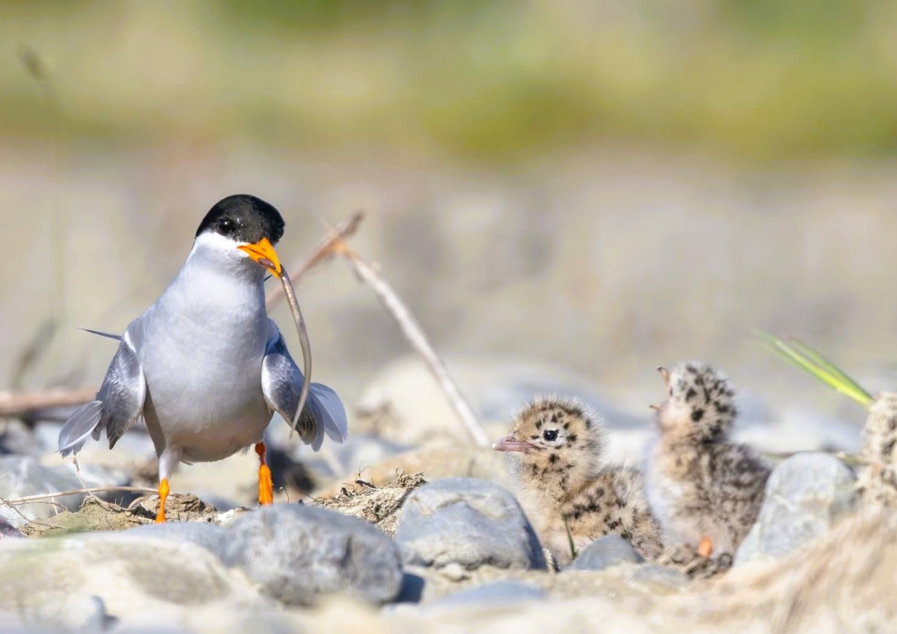
Introducing the Tarapirohe Black Fronted Tern, it need your vote.
Scientific name:Chlidonias albostriatus
Māori name: Tarapirohe (also written tarapiroe)
Status: Nationally Endangered in New Zealand.
Height: 28-30 cm long
Weight: Around 95 grams
Breeding adults have:
A black cap covering the top of the head
Pale grey body and wings
Bright orange-red bill
Orange legs
Where do they live?
The bird is endemic to New Zealand, meaning it is found naturally nowhere else on Earth.
They breed on the braided rivers of the South Island, including rivers in North Canterbury such as the Ashley/Rakahuri, Waiau, Hurunui, Clarence catchments.
During autumn and winter they move to estuaries, harbours and coastal areas.
How many are there?
Estimates suggest there are only about 5,000 to 10,000 birds left in New Zealand, and the population is still declining.
What do they eat?
Small fish.
Aquatic insects.
Worms and grubs.
One unusual behaviour is that they often follow tractors and ploughs, catching worms and insects exposed by cultivation.
They are the only tern in the world that breeds exclusively inland
Most terns are seabirds, but black fronted terns nest on inland braided riverbeds instead of beaches or islands.
Their nests are almost invisible
They make a simple scrape among river stones. The eggs and chicks are so well camouflaged that people can easily walk past without seeing them.
A single disturbance can cause a nest to fail
If people, dogs, motorcycles or vehicles disturb a colony, adults may abandon their nests, leaving eggs or chicks vulnerable.
Introduced predators are a major threat
Stoats, ferrets, cats, hedgehogs and rats can wipe out nests. The birds evolved without these mammalian predators and have few defences against them. The bird has evolved to protect themselves against predation by birds from the air and have no defences against mammalian predators who hunt by smell and often at night.
Their habitat is disappearing
Braided riverbeds are being invaded by weeds and altered by river engineering, gravel extraction and land-use changes. This reduces suitable nesting habitat.
They are fearless defenders
Although they are small birds, they aggressively dive-bomb intruders and may even strike people on the head when protecting their chicks.
Why North Canterbury Matters
North Canterbury contains some of the most important braided river habitats in New Zealand. Rivers such as the Hurunui, Waiau Uwha and Clarence/Waiau Toa support breeding colonies of black-fronted terns. Conservation groups, Environment Canterbury, Department of Conservation, and local community groups (which Hurunui District Council lend a hand in) work to protect nesting sites through predator control, weed management and public awareness.

